
Why Disengaged Employees Are Your Biggest Culture Risk

Nikki Parris
By Nikki Parris, Executive Coach & Team Development Lead | Andrea Holland Coaching
It's summertime and the pools are calling.
Nobody has to explain what makes pool time enjoyable. And nobody needs a lesson on what ruins it either. It doesn't take much contamination before nobody wants to jump in.
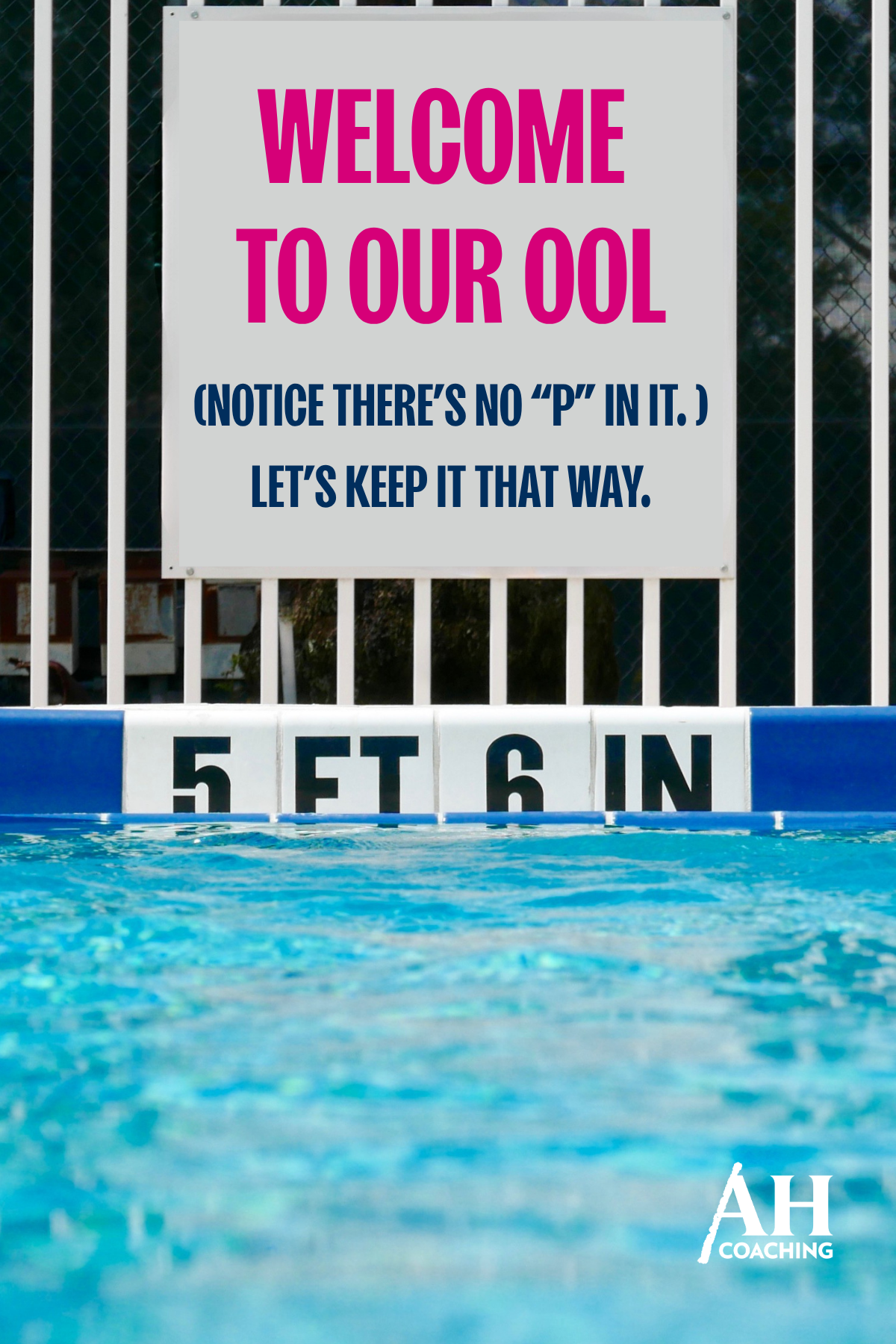
The same thing is true at work.
Every organization has an invisible sign hanging somewhere in its culture: "Welcome. The water is clear. Let's keep it that way." Most people roll their eyes at signs like that. Until the water starts changing color.
What Is Quiet Disengagement - And Why Does It Cost So Much?
Quiet disengagement happens when employees remain physically present but mentally and emotionally withdrawn from the team's mission. Unlike loud resistance or visible conflict, it's nearly impossible to detect in real time — and that's exactly what makes it so damaging.
According to Gallup, only 23% of employees worldwide are actively engaged at work. The rest are either passively present or actively undermining the environments around them. The economic cost? Gallup estimates low engagement costs the global economy approximately $8.9 trillion annually.*
When unhealthy behaviors go unchecked, people don't always leave right away. First, they disengage.
They stop diving in. Stop contributing. Stop trusting. Stop stretching.
They're still around, but they're no longer swimming with the team. They're standing in the shallow end, taking up space, protecting themselves, and pretending nobody notices the water getting a little greener by the day.
The strongest leaders aren't just managing performance. They're protecting the water everyone has to swim in.
The Kiddie Pool Problem: How Quiet Disengagement Erodes Team Culture
Every pool — and every organization — encounters them from time to time: the mission-muted folks who nod in the meeting and then quietly poke holes in the boat after it leaves the dock.
They're not always loud. In fact, some of the most expensive culture leaks are the quiet ones.
They show up, clock in, and even look busy. But they are not carrying the mission. Their fauxductivity (fake productivity) levels are high, but their real outputs are low. They're not creating momentum for the greater good. They're simply enjoying the temperature of the water while others do the deep-end work.
This isn't a personality problem. It's a culture signal. And leaders who ignore it long enough eventually find themselves managing an entire team standing in the shallow end — wondering where the momentum went.
How Leaders Can Spot Disengagement Before It Becomes a Culture Problem
Leaders don't need to become lifeguards. But they do need to pay attention to the water.
Culture problems rarely announce themselves. The danger isn't what turns the water blue — it's what changes the water before anyone notices.
Ask yourself these questions:
Who consistently drains energy from a room?
Who brings problems without curiosity — and critique without contribution?
Who benefits from the team's effort while quietly refusing to help build the team's future?
This is not about demanding relentless positivity. Healthy teams need truth-tellers, constructive challengers, and critical thinkers. They need people willing to ask difficult questions, challenge assumptions, and surface concerns before they become problems.
But there is a meaningful difference between someone who asks hard questions because they care about the mission and someone who casts doubt because they're uncomfortable with where the mission is going.
One strengthens the water. The other slowly contaminates it.
The difference matters because people may not immediately see the change — but they will eventually feel it. And when they do, they stop diving in.
What We’ve Learned Healthy Team Culture Actually Looks Like
The deep water is where real leadership lives.
It's where people take ownership, share ideas before they're perfect, disagree with respect, make room for others, and stay tethered to the bigger purpose even when the work gets hard.
In the big pool, people aren't there merely to cool off. They're there to move. To learn. To build. To stretch. To create waves that carry the mission farther than any one person could swimming alone.
Strong culture doesn't mean everyone agrees all the time. It means people are safe enough to be honest, accountable enough to follow through, and invested enough to care about what happens after they leave the room. We’ve seen so much evidence of this in our Alignment Accelerator work with leadership teams.
5 Ways Leaders Can Protect Workplace Culture and Re-Engage Their Teams
1. Name the standard. Make the mission visible, repeatable, and impossible to misunderstand. If people don't know what the culture requires of them — in explicit terms — don't be surprised when they default to what's comfortable.
2. Watch the water. Pay attention to patterns, not one-off bad days. A single rough week is human. A consistent pattern of low contribution, energy drain, or mission resistance is a data point that deserves a direct conversation.
3. Invite curiosity. Before assuming someone is disengaged by choice, ask whether the resistance is rooted in fear, fatigue, confusion, or misalignment. The answer changes your approach entirely.
4. Protect the culture. Don't let one person's private puddle become everyone else's problem. Allowing toxic patterns to persist — even quietly — sends a message to your high-performers that you're not willing to protect what you've built.
5. Celebrate deep-end behavior. Recognize the people who take ownership, encourage others, and keep swimming toward the bigger mission. Visibility is currency. Use it deliberately
The Goal Isn't a Team Where Nobody Rocks the Boat
It's pool season, but we're not here to daydream. The goal isn't to build a culture where nobody rocks the boat. The goal is to build a culture where people are willing to jump into the deep end - together.
Where trust runs deep and accountability is normal, contribution is welcomed — expected, even — and growth is worth the risk.
Because the strongest teams aren't standing around the edge of the pool wondering what might happen. They're already in the water.
They’re swimming hard, going deep, making waves and celebrating the wins with a noticeable splash.
Is your team swimming together — or just sharing the same pool?
If you're seeing patterns of quiet disengagement on your team, that's not a personality problem — it's a culture alignment problem. The Alignment Accelerator was built to help leadership teams name what's not working, close the gap between intention and impact, and build the kind of culture where people choose to go deep.
Book a conversation with our team →
Nikki Parris is an executive and team coach with Andrea Holland Coaching, specializing in organizational culture, team alignment, and succession planning. Andrea Holland Coaching works with executives and HR leaders to close the gap between how leadership is intended and how it actually lands.